Where You Look Is Where You Crash: the MTB Vision Skill Nobody Practices
Quick Answer: Your bike goes where your eyes go — target fixation (staring at the rock you fear) steers you straight into it. Train your gaze to sweep 15-20 feet ahead on flow sections, spot-check hazards early, then snap back to your exit line. Ten minutes of deliberate vision drills fixes more crashes than any suspension upgrade.
Every rider has lived it: one scary rock in a wide-open trail, you stare at it, and your front wheel finds it like it was magnetized. That’s not clumsiness — it’s your steering system working exactly as designed, pointed at the wrong target.
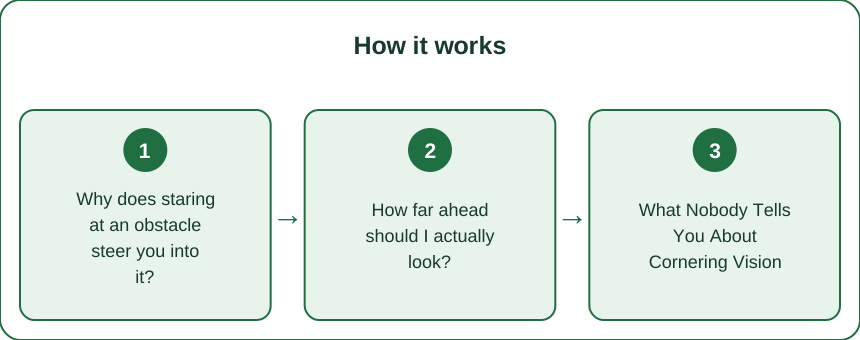
Why does staring at an obstacle steer you into it?
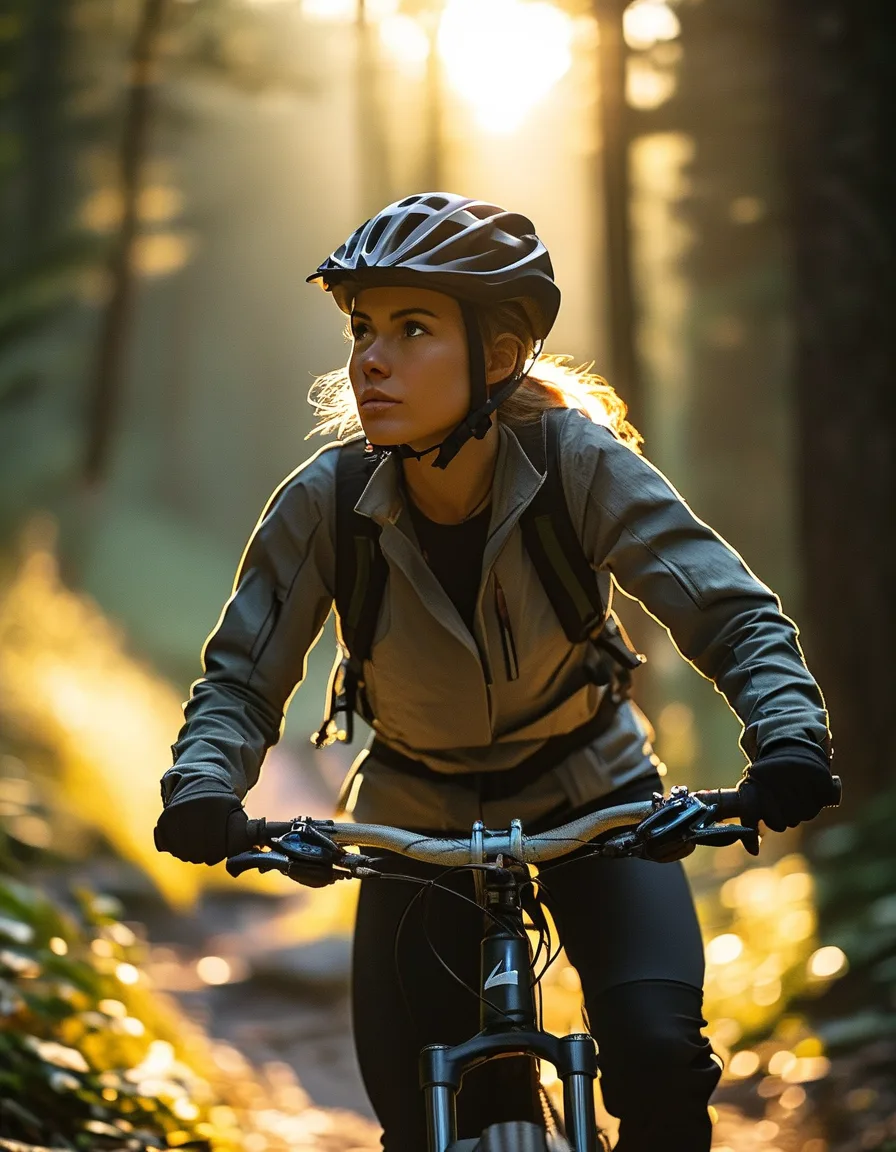
Because your balance and steering run on your visual system. Where your eyes fix, your head turns; where your head turns, your shoulders follow; where your shoulders point, the bike goes. It’s a chain you can’t consciously interrupt at trail speed — the body follows gaze automatically.
Target fixation is that chain locked onto a hazard: the brain, under threat, wants to monitor the danger, so the eyes stay glued to the rock — and the bike faithfully delivers you to what you’re watching.
The fix isn’t ‘don’t look at hazards.’ It’s a trained gaze pattern: acknowledge the hazard early (a quarter-second glance), then deliberately fix on the line past it — your exit. Eyes on the gap, not the rock. The bike follows gaze either way; you choose the target.
How far ahead should I actually look?
It scales with speed — the working rule is your gaze leads the bike by about 2 seconds of travel:
- Slow technical crawling: 6-10 feet ahead — enough to place wheels precisely.
- Normal flow-trail speed: 15-20 feet — the sweet spot most riders under-use.
- Fast open sections: 30+ feet, with your gaze sweeping like a headlight, not parked.
The pattern good riders run automatically: scan far → flick near → back far. Far gaze picks the line; brief near-checks confirm wheel placement; far gaze resumes command. Beginners invert this — 80% of their gaze parked 3 feet off the front tire — which is why everything feels sudden and every corner arrives as a surprise.
You can hear the difference in your own riding: when the trail feels ‘fast and panicky,’ your eyes are too close; when the same speed feels ‘slow and roomy,’ they’re out where they belong.
What Nobody Tells You About Cornering Vision
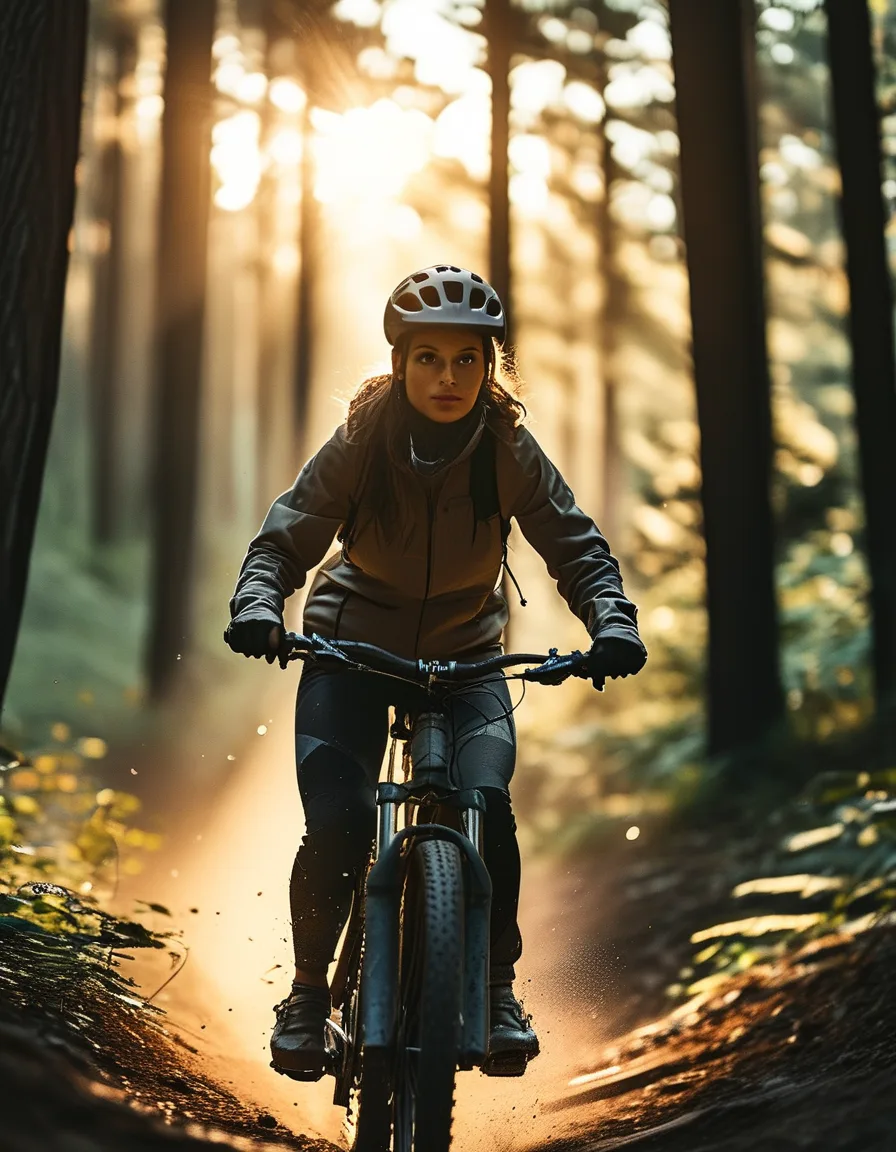
The cornering breakthrough most riders buy new tires to avoid learning: look through the corner to the exit before you enter it — even when the exit is out of sight around the bend, your eyes should be reaching for where it will appear.
The mechanism is the same gaze-chain: eyes to the exit turns your head, head turns shoulders, shoulders lean the bike onto the arc. Riders who stare at the apex (or worse, the outside edge they fear) get exactly the wide, awkward line they were staring at. The corner was never a grip problem — it was a gaze problem wearing a grip costume.
Drill it in a parking lot: set two cones as a corner, ride it 10 times staring at the cones, then 10 times with eyes locked on an exit marker. The bike’s behavior change is immediate enough to feel slightly spooky — same rider, same corner, different eyes.
FAQ: MTB Vision Questions, Answered
How do I stop staring at hazards when I’m scared?
Give your eyes a job instead of a prohibition: the cue ‘find the exit’ works where ‘don’t look at the rock’ fails, because the brain can’t aim at a negative. Walk intimidating sections first — a hazard your brain has previewed loses its gaze-magnetism.
Any drills that don’t need a trail?
The cone-corner drill, and ‘call the line’: on any easy ride, say your line out loud 15 feet early (‘left of root, over the crown, exit wide’). Verbalizing forces the far gaze — you can’t call what you haven’t looked at.
Does this apply at walking speeds on tech features?
Even more — slow-speed balance leans harder on vision. On tight tech, gaze goes where the front wheel needs to land next, not where it is. Track-stand practice while moving your gaze around teaches the separation beautifully.
TL;DR:
- The bike follows your gaze automatically — target fixation steers you into what you fear watching
- Gaze leads by ~2 seconds: 15-20 feet at flow speed, sweeping like a headlight, scan-far-flick-near rhythm
- Corners: eyes through to the exit before entry — most ‘grip problems’ are gaze problems
- Train with cone corners and calling your line out loud; walk scary sections to demagnetize them
Your bike has been obeying your eyes perfectly all along — the upgrade is aiming them. This is general information, not medical advice.
Keep Reading
This article is for general informational and styling purposes only. Fit, sizing, and product availability may vary.