The Strength Training That Actually Translates to Better Mountain Biking
Quick Answer: Mountain biking benefits most from unilateral leg strength (single-leg squats, step-ups), core anti-rotation work, and grip and forearm endurance — far more than the bilateral, symmetrical lifts (standard barbell squats, bench press) that dominate typical gym programming, because trail riding demands asymmetric, reactive stability more than raw symmetric force.
A strong squat number doesn’t automatically translate to trail control — the specific demands of mountain biking favor a different kind of strength than a standard gym program builds by default.

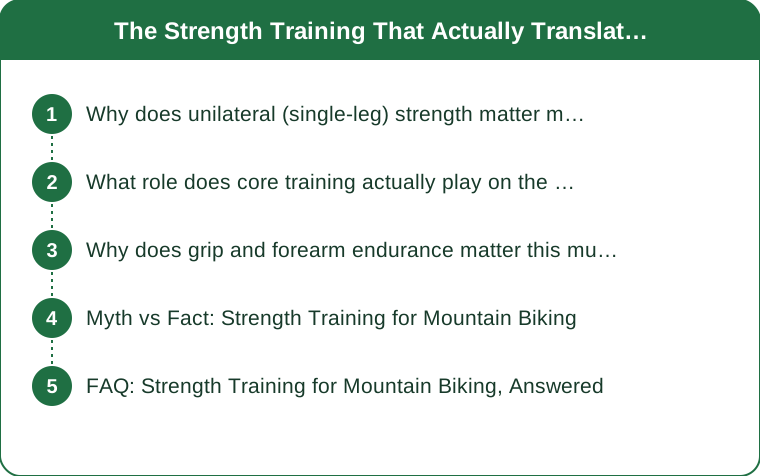
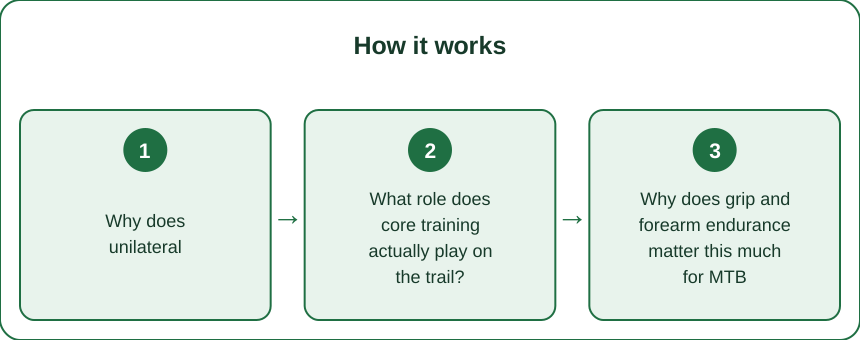
Why does unilateral (single-leg) strength matter more than bilateral lifts for MTB?
Mountain biking rarely loads both legs identically at once — cornering, standing pedal strokes, and technical terrain demand asymmetric leg loading and stability. Single-leg squats, step-ups, and lunges train this specific pattern far more directly than a standard barbell squat, which loads both legs symmetrically.
What role does core training actually play on the trail?
Anti-rotation core strength — resisting twisting forces rather than creating movement — is what stabilizes your body over rough, unpredictable terrain. Exercises like Pallof presses and dead bugs train this specific function far more relevantly than standard sit-ups or crunches, which train spinal flexion instead.

Why does grip and forearm endurance matter this much for MTB specifically?
Sustained handlebar grip over rough terrain fatigues forearms significantly, and grip failure directly compromises control at exactly the wrong moment. Farmer’s carries and dead hangs build this specific endurance far more directly than typical gym forearm work, which is often an afterthought.
Myth vs Fact: Strength Training for Mountain Biking
Myth: A big squat and deadlift number is the best predictor of MTB performance. Fact: Unilateral stability and grip endurance tend to correlate more directly with actual trail performance than bilateral max-strength numbers.
Myth: Core training for MTB means the same ab exercises as any other sport. Fact: Anti-rotation core work specifically matches the stabilization demands of riding over rough terrain better than standard flexion-based ab exercises.
Myth: Upper body strength doesn’t matter much for mountain biking. Fact: Grip, forearm, and shoulder stability all play a meaningful role in control and fatigue resistance over long or technical rides.
FAQ: Strength Training for Mountain Biking, Answered
How many days a week should MTB-specific strength training happen?
Most riders see good results from 2 dedicated strength sessions weekly, separate from ride days to allow adequate recovery.
Should I still do bilateral lifts like squats and deadlifts at all?
Yes — they build a strong general strength base that unilateral and core work then builds specificity on top of, rather than replacing entirely.
How soon before race season should this specific training start?
Starting MTB-specific strength work 8-12 weeks out from key rides or races allows enough time to build meaningful, trail-relevant adaptations.
TL;DR:
- Unilateral leg strength matches MTB’s asymmetric loading demands far better than bilateral lifts
- Anti-rotation core work stabilizes the body over rough terrain more directly than standard ab work
- Grip and forearm endurance training addresses a common, often-overlooked fatigue point
- Bilateral lifts still matter as a strength base — unilateral and core work build specificity on top
A bigger squat isn’t wasted effort, but it’s the unilateral and grip-specific work that actually shows up on the trail.
Keep Reading
This article is for general informational and styling purposes only. Fit, sizing, and product availability may vary.