Why Your Tubeless Mountain Bike Tires Lose Pressure Overnight (Even With No Puncture)
Quick Answer: Tubeless tires normally lose 2-5 PSI overnight simply from air slowly migrating through the tire’s microscopic pores and around the bead seal, a process sealant slows but doesn’t fully stop — this is different from an actual puncture leak, and only becomes a real problem once daily loss exceeds roughly 8-10 PSI.
A soft tire in the morning feels like a mystery flat, but for tubeless setups, some pressure loss overnight is just how the system works.

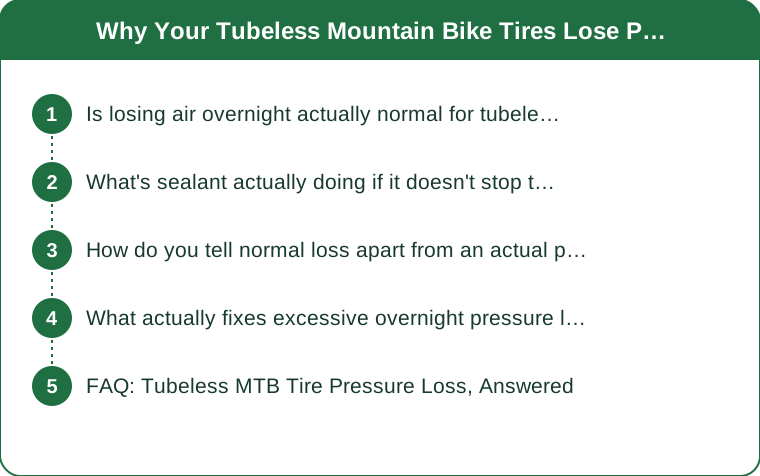
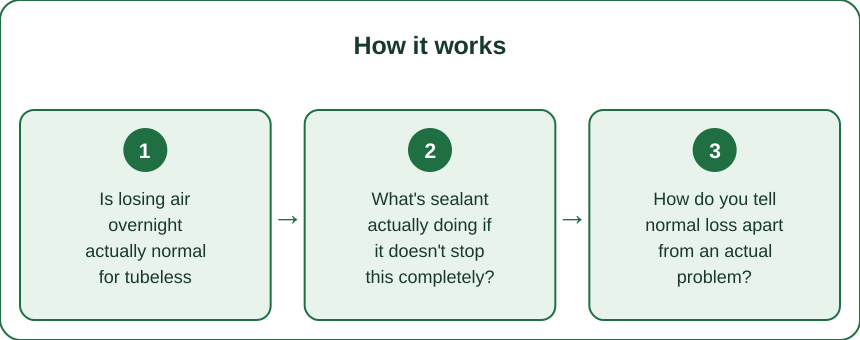
Is losing air overnight actually normal for tubeless tires?
Yes — tubeless tires are inherently slightly more porous than tubed setups, since air can migrate slowly through the tire casing itself and around the rim bead, not just through obvious punctures. A drop of a few PSI overnight is considered within normal range.
What’s sealant actually doing if it doesn’t stop this completely?
Sealant primarily plugs small punctures and seals the bead seat, but it doesn’t create a perfectly airtight barrier against the slow, diffuse porosity of the tire casing itself — it manages the bigger leaks, not the gradual baseline loss.

How do you tell normal loss apart from an actual problem?
Track your pressure drop over a few consecutive days. Losing 2-5 PSI overnight consistently is typical; losing 10+ PSI, or a tire going fully flat within hours, points to a real issue — usually old, dried-out sealant or a bead that isn’t fully seated.
What actually fixes excessive overnight pressure loss?
Refreshing sealant every 2-3 months (it dries out and loses effectiveness over time) and checking that the bead is fully and evenly seated around the rim solves most cases of pressure loss beyond the normal baseline range.
FAQ: Tubeless MTB Tire Pressure Loss, Answered
How often should I actually check tubeless tire pressure?
Before every ride is ideal, since gradual loss compounds — a tire that’s fine on Monday may be noticeably softer by Friday.
Does temperature affect this pressure loss separately from porosity?
Yes — cooler overnight temperatures alone cause some pressure drop from air contraction, independent of any porosity or sealant issue.
Is it worth switching back to tubes if this loss bothers me?
Most riders find the puncture protection and ride quality of tubeless worth the minor maintenance of periodic pressure checks and sealant refreshes.
TL;DR:
- Losing 2-5 PSI overnight is normal tubeless behavior, not a leak
- Sealant manages punctures and bead sealing, not the tire’s baseline porosity
- Track pressure over several days to spot an actual problem versus normal loss
- Fresh sealant every 2-3 months and a properly seated bead fix most excess loss
Keep Reading
This article is for general informational and styling purposes only. Fit, sizing, and product availability may vary.